Racing your first FMSCI event is a different animal from a casual track day. There's a grid, a scrutineering bay, and officials whose entire job is to check that you and your machine meet the rules before you're allowed near the tarmac. Most of what goes wrong on race day isn't driving error — it's a missing document or a piece of gear left at home.
We've walked riders and drivers through their first FMSCI weekend at circuits from MMRT Chennai to Kari Motor Speedway, and we've built this checklist from the exact questions they ask us beforehand. Here's what you'll walk away with: a full packing list by category, the documents scrutineering will actually check, how a race weekend differs from a regular track day, and what to expect once you're through the gate.
Curious what race weekends are running near you?
Browse Live Events →What Should You Pack for Race Day at an Indian Circuit?
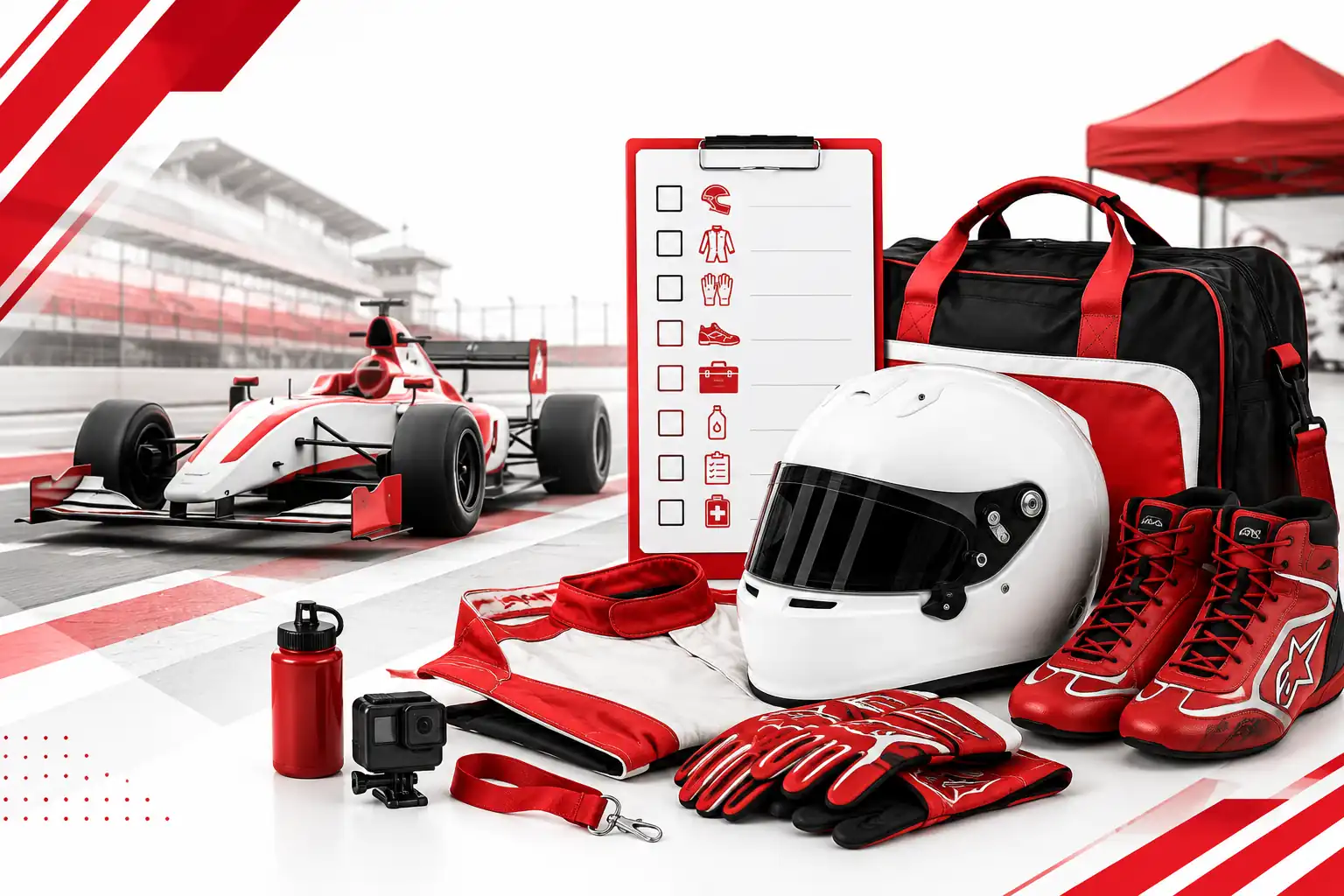
Your race day bag needs to cover four categories: documents, safety gear, vehicle essentials, and personal supplies. Skip any one of these and you're either stuck at scrutineering or stuck in the paddock with no shade and no water for eight hours.
The non-negotiable safety gear
Every FMSCI-sanctioned event requires ARAI-approved or FIA-homologated gear depending on the category — a helmet that meets the standard, a race suit or riding gear appropriate to your class, gloves, and closed-toe footwear. Scrutineers check the homologation label on your helmet, not just whether it looks the part.
- Helmet with a valid homologation sticker — full-face for two-wheeler categories, and it must be within its certification window, not just "look new."
- Race suit or armored riding gear — single or double-layer depending on your category's technical regulations.
- Gloves and closed-toe racing shoes or boots — sandals or sneakers will get you rejected at gear check.
- Back protector or spine protector — mandatory in most two-wheeler novice categories.
- Earplugs — not mandatory, but every experienced racer carries a pair for the paddock and grid.
For a full breakdown of what to buy, rent, or borrow for each piece — including budget ranges for Indian riders — see our track day gear checklist.
| Category | What to Bring |
|---|---|
| Documents | FMSCI/MSCI racing license, medical fitness certificate, entry confirmation, vehicle RC book, insurance copy, indemnity form |
| Safety gear | ARAI-approved helmet, race suit or riding gear, gloves, boots, back protector |
| Vehicle/bike essentials | Tyre pressure gauge, tow strap, spare fasteners, duct tape, basic tool kit, fuel as specified by organizers |
| Personal supplies | Water, electrolyte sachets, sunscreen, cap, energy snacks, first-aid basics, phone power bank |
What Documents Do You Need on Race Day for an FMSCI Event?
You need five documents in hand before you approach the event office: your racing license, a valid medical fitness certificate, your entry confirmation, your vehicle's registration certificate, and a signed indemnity form. Officials check these before you're allowed into scrutineering, not after.
Racing license and medical certificate
If you don't already hold an FMSCI or state-affiliated racing license, you'll need one before you can enter a competitive race weekend — a track day doesn't require this, which is one of the biggest differences between the two. Our FMSCI license guide walks through the exact application steps, cost, and age limits if you haven't sorted this yet. You can also check current licensing categories directly on the official FMSCI website.
The medical certificate is the one people underestimate most. It has to be from a registered practitioner and dated within the validity window most organizers specify — usually within the last 12 months. Riders often ask us if an old certificate from a previous event will do, and the answer is no once it's expired.
Entry confirmation and vehicle paperwork
Your entry confirmation, vehicle RC book, and insurance copy round out the five essentials. Keep both a physical printout and a phone screenshot — paddock signal is unreliable, and the event office needs something they can check against the entry list on the spot.
Ready to get on the grid?
Book Your Spot →How Is a Race Day Different From a Regular Track Day?
A track day is an unstructured, arrive-and-drive session — no grid, no timing that matters competitively, and no scrutineering beyond a basic safety check. A race weekend involves qualifying, a starting grid, wheel-to-wheel competition, and mandatory FMSCI scrutineering before you're cleared to run.
Picture this: you've done a couple of track days at MMRT and you're comfortable with the racing line. Your first race weekend still catches you off guard, because now there's a mandatory briefing, a grid slot with your name on it, and marshals watching for jumped starts. The driving turns out to be the easy part — the procedure is what trips people up.
| What Changes | Track Day | Race Weekend |
|---|---|---|
| Racing license | Not required | FMSCI/MSCI license required |
| Scrutineering | Basic safety check | Full mandatory scrutineering |
| Format | Open sessions, no grid | Qualifying + grid + wheel-to-wheel race |
| Timing | Personal lap timer only | Official timing and scoring |
If you haven't done a track day yet, that's genuinely the better place to start. Our first track day guide covers what a first session actually looks like before you commit to a full race weekend.
What Should You Check on Your Vehicle or Bike Before Race Day?
Before you leave for the circuit, check tyre pressure and tread, brake pad wear, fluid levels, and that every loose item in the cabin or tail is either removed or secured. Scrutineers specifically look for loose battery terminals, unsecured fire extinguishers, and worn brake lines — these are the most common reasons for a fail on first pass.
- Tyre pressure and tread depth — set to your class's cold pressure spec, checked again after your first session once tyres heat up.
- Brake pads and fluid — a fresh bleed if it's been more than a season since your last one.
- Battery and fire extinguisher mounts — must be secured, not just resting in place; this is a common scrutineering fail.
- Helmet and gear homologation labels — visible and legible, not worn off.
- Loose cabin or tail items — floor mats, phone mounts, anything that isn't bolted down comes out before scrutineering.
What Happens During Scrutineering and How Should You Prepare?
Scrutineering is the mandatory pre-race inspection where officials check your gear, your vehicle, and your documents before clearing you to run. It typically takes 15–20 minutes if everything's in order, and happens in a queue — arriving early matters more than almost anything else on this list.
In our events, the riders who breeze through scrutineering are the ones who laid everything out the night before — gear, documents, and vehicle checks done, not scrambled together in the paddock at 6 a.m. Officials check helmet homologation, suit rating, harness or seatbelt condition, and that your numbers and decals match your entry.
What Should You Eat, Carry, and Plan for a Full Race Weekend?
A race weekend runs 6–10 hours including briefings, qualifying, and the race itself, so plan for a full day, not a two-hour session. Carry more water than you think you need, pack electrolytes, and eat light before your session — a heavy meal and adrenaline don't mix well on track.
Weather and seasonal timing
Weather matters more in India than most first-timers expect. Peak racing season runs November through February, when circuits are dry and grip is consistent. Monsoon months between June and September see race calendars thin out or shift indoors to karting venues — check your event's supp-regs for wet-weather contingency plans before you travel.
- Arrive 90 minutes early. Paddock gates typically open 2–3 hours before the first session, and scrutineering queues move fastest early.
- Attend the mandatory driver/rider briefing. Missing it can get you excluded from your session regardless of how ready your car or bike is.
- Check the timing sheet after every session. Your grid position for the next round often depends on it.
- Know the flag rules cold. A missed black flag or yellow flag response is one of the fastest ways to get black-flagged yourself.
- Keep your transponder or timing chip on you. Losing it mid-weekend means a scramble with race control to get a replacement.
Racers across MMRT Chennai, Kari Motor Speedway, and circuits nationwide book their weekends through Racesforall.
Find Your Next Event →What Do First-Time Racers Ask Most Often?
Print or screenshot this race day checklist before your next event — the five minutes it takes to double-check your bag is the cheapest insurance you'll buy all weekend.
Don't let a missing document end your race weekend early.
Browse Race Weekends →