This track day gear checklist exists because gear, not license or lap time, decides who gets turned away at scrutineering. Scrutineering is the pre-session gear and vehicle inspection every circuit runs before you're allowed on track. In the context of a track day, it decides whether you ride or drive — not your license.
We've seen riders drive two hours to MMRT only for a motocross helmet to get rejected on the spot. Drivers show up in flip-flops, not realizing anyone even checks footwear. After fielding hundreds of first-timer questions on Racesforall, we've found gear confusion wastes more trips than anything else.
Below is what riders and drivers actually need, and what's optional until you're going faster. We also cover whether renting or buying makes more sense for your first session.
Every rule here reflects what MMRT and Kari Motor Speedway actually enforce at their own scrutineering bays. It's not a generic international standard that may not even apply.
Already know which circuit you're headed to? Browse live track days on Racesforall →
Browse Events →The Track Day Gear Checklist: What Do You Need for Your First Session in India?
What you need comes down to whether you're riding or driving, and which run group you land in. Every circuit runs a gear check at scrutineering before letting anyone on track, and that's true even for an untimed, novice-level open session, not just an actual race. If you've read our first track day guide, you already know a track day itself doesn't need an FMSCI license — but the gear rules don't care about that either way.
Here's the split worth knowing before you pack:
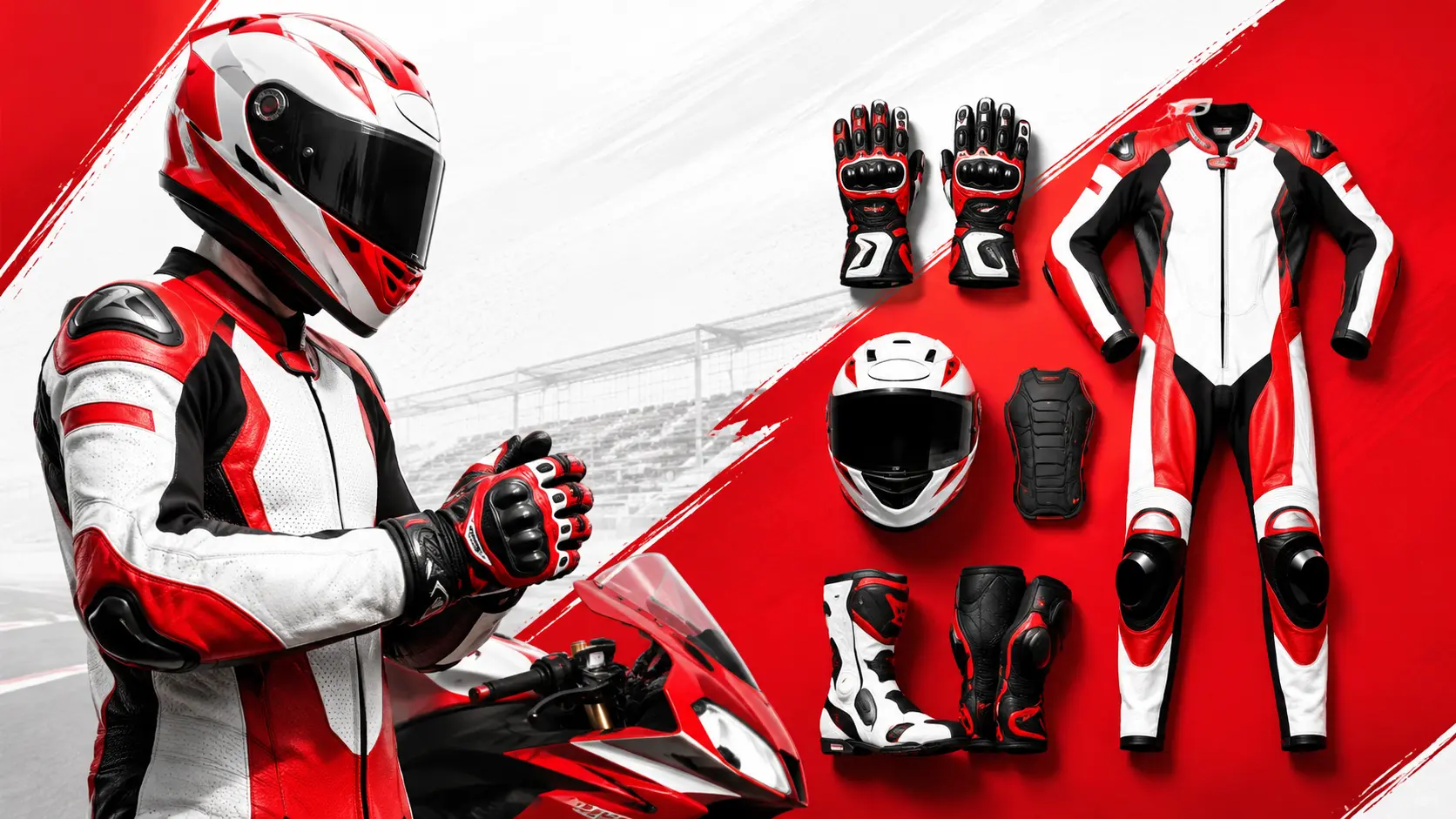
- Riders (motorcycles): full-face helmet, riding suit or armoured jacket-and-pants, gauntlet gloves, and ankle boots. All four get checked, no exceptions.
- Drivers (cars): a helmet and closed-toe shoes cover the minimum for novice open sessions, and a driving suit only becomes mandatory once you're in a faster or wheel-to-wheel group.
- Both: bring a valid road license as ID and a signed indemnity form — organisers usually check these alongside your gear, not as a separate line.
Why Gear Rules Apply Even Without a Race License
A track day may be untimed, but a 100–150 km/h off doesn't care whether anyone's keeping score. Marshals treat the gear check as a safety gate, not a formality tied to competition. Riders often assume "no license needed" means "no gear needed" — that's the exact assumption that gets people turned back at the gate.
What Helmet Standards Are Required — ISI, ARAI, or Snell?
An ISI-certified full-face helmet clears novice open sessions at both MMRT and Kari Motor Speedway. Faster groups and structured riding schools tend to push for an additional ECE or Snell rating, built for actual circuit speeds. The rule that never changes: no peak, ever.
Almost every scrutineering bay in India rejects motocross-style helmets with a peak — it catches wind at speed and can snap your head back hard on a fast straight. MMRT's back straight alone puts novice riders past 120 km/h without much effort. Sort your helmet type out before the drive to the circuit, not once you're already there.
What Should Riders Wear for a Motorcycle Track Day?
Riders take on the highest injury risk when things go wrong — there's no chassis between you and the tarmac. This is the one area where cutting corners on gear actually changes what a low-speed spill turns into.
Rider Gear Checklist
- Full-face helmet (ISI or ECE, no peak): non-negotiable, and the first thing scrutineers look at.
- One-piece leather suit or two-piece with CE armour: one-piece leathers are the standard for faster groups; a decent textile jacket-and-pants combo with armour is usually fine for novice sessions.
- Gauntlet gloves that pass the wrist: gloves covering only the palm get rejected often — the gauntlet has to overlap your jacket cuff.
- Boots that cover the ankle: canvas shoes and sneakers get turned away at almost every circuit gate.
Real scenario: say you've booked your first session at Kari Motor Speedway. You've got a helmet, but you're not sure if it's actually rated for circuit use or just daily commuting. Most first-timers never check the visor rating or peak style before the drive out — and that's exactly what gets caught at scrutineering. Not the bike, not the license. The helmet.
Ready to book your first ride day? Check gear requirements right on the event listing.
Find a Track Day →What Should Drivers Wear for a Car Track Day?
A helmet and closed-toe shoes cover the minimum for a novice open session. The car does most of the protective work, so drivers start with a lower bar than riders — but that bar climbs fast once you're in a faster or wheel-to-wheel group.
Driver Gear by Session Type
| Session Type | Minimum Gear Required |
|---|---|
| Novice open track day | ISI or ECE helmet, closed-toe shoes, road license as ID |
| Intermediate / faster group | Helmet, closed shoes, long sleeves and pants recommended |
| Structured riding/driving school | Fireproof driving suit, helmet, closed shoes, gloves recommended |
A driver who books straight into an "arrive-and-drive" event with instruction often only learns about the suit requirement at check-in — which makes for an awkward morning. Confirm the tier before you book and skip the surprise entirely.
Should You Rent or Buy Your Track Day Gear?
Rent for your first session or two, then buy once you know you'll be back. Most circuits, MMRT and Kari Motor Speedway included, stock rental helmets and suits in common sizes for exactly this reason — it takes away the upfront cost for anyone who isn't yet sure track days are their thing.
| Option | Typical Cost | Best For |
|---|---|---|
| Rent at the circuit | ₹800–2,000 per session | Your first 1–2 track days |
| Buy entry-level rider gear | ₹12,000–25,000 total | Riders booking sessions regularly |
| Buy entry-level driver gear | ₹6,000–15,000 total | Drivers past their first two sessions |
What varies: rental stock depends on the organiser and can run out on popular dates, so confirm it's actually available rather than assuming you'll rent on arrival. For most regular riders, buying pays for itself after four or five rental sessions, and gear that actually fits you is safer than borrowed kit in the wrong size.
What Gear Mistakes Get First-Timers Rejected at Scrutineering?
The same handful of mistakes come up at nearly every circuit, over and over. Here's what actually trips people up, roughly in order of how often it happens:
- Motocross helmets with a peak. Rejected on sight, for riders and drivers alike — the peak is a wind hazard at circuit speeds.
- Canvas shoes or sandals for drivers. Even the most laid-back novice session checks for closed-toe shoes.
- Gloves that stop at the wrist. A proper gauntlet overlaps the jacket cuff — fingerless or short gloves won't pass.
- Assuming rental gear will just be there. Popular dates can run out of common sizes fast, so confirm availability ahead of time, not at check-in.
- Turning up in daily-commute gear for a faster group. A road helmet works fine for a novice open session, but structured schools and faster groups expect gear rated for the circuit.
Track Day Gear Checklist: Frequently Asked Questions
What gear is mandatory for a track day in India?
Can I use a road helmet for a track day?
How much does track day gear cost in India?
Should I rent or buy gear for my first track day?
What's the difference between rider gear and driver gear for a track day?
Do ISI helmets meet track day requirements at MMRT and Kari Motor Speedway?
What happens if my gear fails scrutineering?
How do I book a track day with the right gear requirement on Racesforall?
Join 1,000+ riders and drivers who've booked their track days through Racesforall. Find your next event today →
Book Your Track Day →Keep this track day gear checklist handy before your next session — the rules don't change often, but it's still worth double-checking against your specific event listing. Once your gear's sorted, the next thing to figure out is usually which circuit to pick. Our first track day guide compares MMRT and Kari Motor Speedway for beginners, and our FMSCI license guide walks through what changes once you're ready to move from track days into sanctioned racing.